

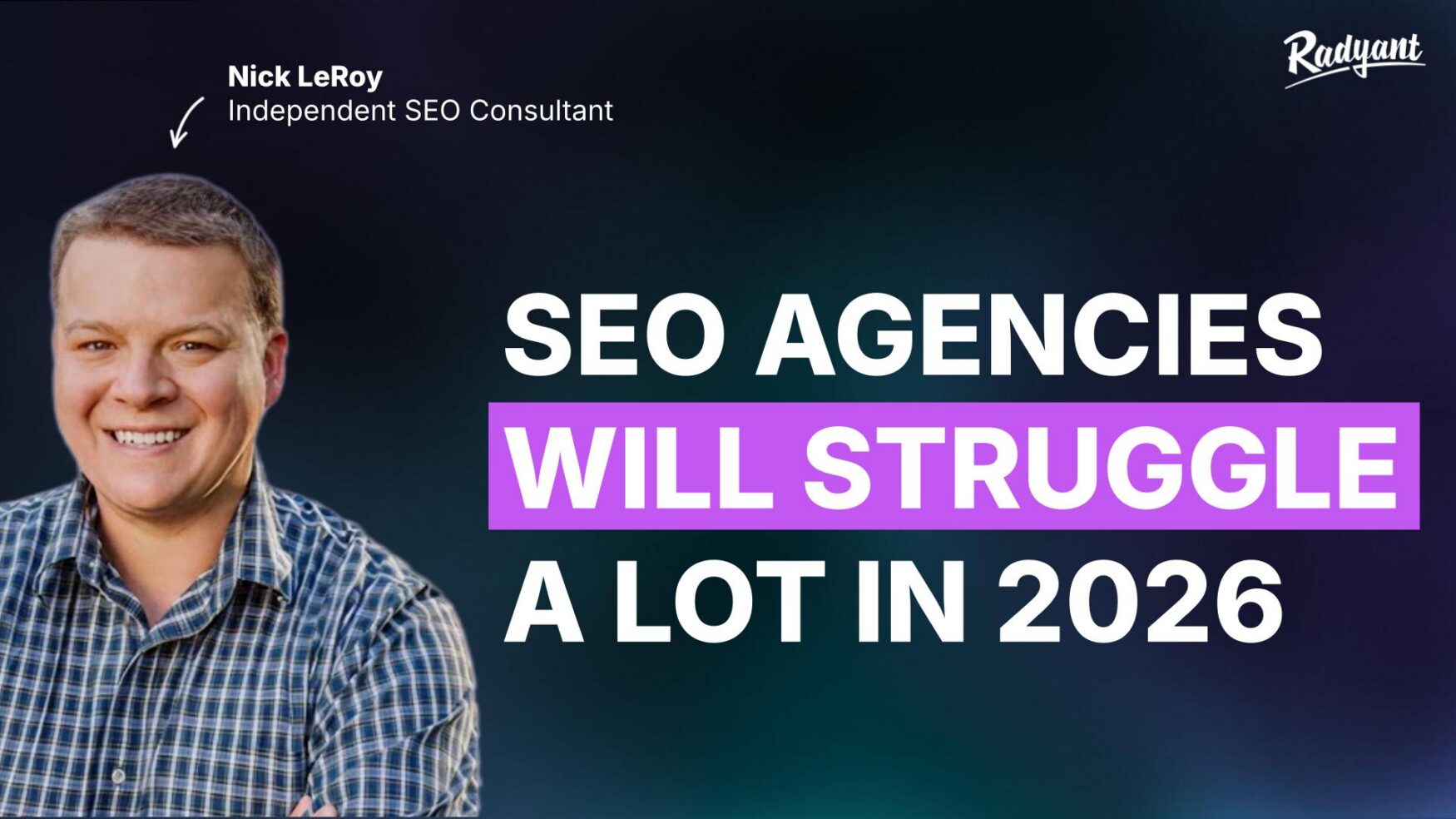
Seven years ago, Nick LeRoy got fired. Today, he runs one of SEO’s most trusted newsletters with over 12.5k subscribers, operates SEOjobs.com with over 200k annual sessions, and consults with enterprise brands on SEO strategy that actually moves the needle.
Nick is an independent SEO consultant who helps enterprise brands turn SEO into a revenue-generating channel, not just a traffic report. He’s also the mind behind SEOjobs.com and PPCjobs.com, connecting talent with opportunities, and publishes the #SEOForLunch newsletter, read by everyone from enterprise SEOs to Google employees themselves.
What makes Nick different? He’ll tell you the uncomfortable truths most consultants won’t. Like why your 5k/month retainer probably isn’t working. Or why “organic visibility captures demand; it doesn’t create it.” Or why SEO alone won’t save a business with a shitty product.
Check out these links if you want to learn more about Nick’s work:
- “FIRED To $165,036.20 in 8 Months. My Freelancing Story”
- https://www.seojobs.com/
- https://www.ppcjobs.com/
Check out the full episode
Check out the episode on YouTube, Spotify, or Apple Podcasts.

Mit dem Laden des Videos akzeptieren Sie die Datenschutzerklärung von YouTube.
Mehr erfahren
Auto-generated transcript
Niklas Buschner (00:01.775)
Seven years ago, Nick Leroy got fired. Today, he runs one of SEO’s most trusted newsletters with over 12,500 subscribers, operates seojobs.com with over 200,000 annual sessions, and consults with enterprise brands on SEO strategy that actually moves the needle. Nick is an independent SEO consultant who helps enterprise brands turn SEO into a revenue generating channel, not just a traffic report.
He’s also the mind behind SEO jobs dot com and PPC jobs dot com connecting talent with opportunities and publishes the SEO for lunch newsletter read by everyone from enterprise SEOs to Google employees themselves. So what makes Nick different? He’ll tell you the uncomfortable truth. Most consultants won’t like why your 5k a month retainer probably isn’t working or why organic visibility captures demand. It doesn’t create it.
Or why SEO alone won’t save a business with a shitty product. I think there’s a lot to dive into. So welcome to the podcast, Nick.
Nick LeRoy (01:11.02)
Yeah, thank you so much for having me. I think that’s one of the kindest intros I’ve received.
Niklas Buschner (01:15.853)
Now I always try to make the, and I always try to put a lot of emphasis on the intro as you usually do like with the hook on LinkedIn. So I really, I really appreciate that feedback. let’s start with the beginning of your entrepreneurial journey, because I obviously had this little downer at the start with like you getting fired. seven years ago, you actually wrote yourself getting fired sucked, but it was also the start of everything that actually mattered.
That like was super intriguing. So take us with you through that phase.
Nick LeRoy (01:45.774)
Yeah, I mean, it’s so true. I tell people all the time that actively make a decision to forego their paycheck to take an entrepreneurial route. I have so much respect for those people because I kind of joked that I got pushed out the window and then I just landed on the entrepreneur world. And going into that, as you had mentioned, I was actually let go twice.
from two different roles. know, seven, eight years ago had been dismissed from a role. And then two years after that, I was leading a team and the company was impacted really hard with COVID. And so my entire team got let go. In fact, they let them go before they even told me. And then I was given a 30 day runway to kind of wrap up the service. And honestly, the…
TLDR of the story is I always wanted to go out on my own, but I have a wife, I have three kids, health insurance in America is ungodly expensive, and it just never really felt like a good, practical solution, even if that’s what I wanted. But, so I always just did things on the side, you know, a little project here and there to push myself and learn, but you know, nine to five is the day.
But what happened with this situation was, and I actually wrote about this, you Nick, I’ll send you the link if you want to include it in the show notes, you know, and it’s basically documenting kind of this story that I’m giving you the heads up on. But like I said, I got 30 day runway. Hey, you’re losing your job in 30 days. If you’ll stick around and do this, great. I started interviewing. You know, you know how it goes. Like you’re talking in your industry, you’re trying to figure things out. And that was the first thing we’ll talk about this later. But
I hated every experience I had on like Indeed and LinkedIn and ZipRecruiter. These big mammoth sites where if you type in SEO into the search bar, sure you’ll get some SEO jobs, but you’re also gonna get Java developer where there’s a bullet halfway down that says like, if they know SEO, like bonus points. So it just felt really unrelated. But then through my own network, I was very fortunate to…
Nick LeRoy (04:11.49)
basically have two different job opportunities. The first one was for a local large company, Fortune 500 here in Minnesota, and I went through five interviews and I knew people on the team. I was more than qualified for the position. And then I was kind of shocked. I got the phone call and they were like, yeah, thanks, but no thanks. And what drove me crazy is I remember like kind of being heartbroken because I kind of had in my brain like
figured out this is where I’m gonna be. But I asked her, said, okay, I wasn’t expecting that, but what kind of feedback can you give me? Like obviously I made it to the end, I wasn’t the right or the best option for you guys, like can you give me something that I can take away? And the response was, no, like we don’t share that stuff externally. And so I’m just like flabbergasted and know, click and it’s just like.
Oh shit, like what are we going to do? And it kind of just occurred to me, you know, through that interview. And then I had one other interview that, you know, it went, it was someone I had known we were discussing, kind of bridging a salary gap with ownership in his agency. And it just really didn’t go the direction that either one of us saw as, you know, a real option. So it was really at that point where I was just like, wow, like it’s COVID, like.
none of the regular rules, you know, stand. I think I’ve got to try this. And I realize that I’m being very lengthy right here, but this is what was most important for me. I had mentioned before, for many, many years, I had wanted to go out on my own, but I felt like it was irresponsible given the, I actually felt like it was kind of selfish. Like, you know, for me to prioritize. I tell people, it’s one thing for me to eat ramen every night.
It’s one thing for my wife and I to eat ramen, we’re committed to each other, but my kids didn’t volunteer to come into this world eating ramen and scrambled eggs. So what it came down to was my wife and I talked, I told her, I was like, I gotta do this. I was like, because it’s the only way that I’m gonna be a good employee again. I have to do this and fail, and then I can become a good employee because I’ve scratched that itch.
Nick LeRoy (06:39.778)
Or if it works, like even better, like then you get to own your own business, right? And that brings us to today, fast forward, you know, six, seven years and, you know, fortunate enough to be joining you today.
Niklas Buschner (06:54.157)
I mean, in retrospective, now it all makes sense that now we’re talking from a point in time where you have already worked with, some great companies and have achieved some great results. We’ll talk about that in a second, but was there anything in terms of like mental model mindset wise, et cetera, helped you push through? Because I mean, it’s something where it could also see people just
be very desperate and like being this limbo of, okay, I’ll just try the next interview process and maybe it will work then and like not really moving any back and forth. So what helped you?
Nick LeRoy (07:36.291)
I think, like I said, I had always wanted to go out on my own, but I will tell you now, I feel like I made more excuses for why I can’t do it. So it really felt like this was that shot. And it’s like, I’m not trying to do the whole thing. It’s like, yo, one shot. But that’s really what it was. It was like, we are in a really, really unique situation with COVID. There’s very little to no cost with
upstarts for like a consultancy position and so I just went all in and to be completely honest with you I just took the mindset of like failure was not an option. I checked my ego like I came from agencies where like I was working with like the three four five largest clients they have overseeing a million dollars in book value and like did it well. I mean heck even the one the part of the reason I got let go of
during COVID was simply because it was a million dollar plus annual contract that they didn’t renew all because of COVID. So all that to be said, it was just, I wanted it to work so bad and I was unwilling to compromise my children having what they need, my wife getting what she needs. And that’s nothing, you know, glamorous, but I just know it wasn’t an option.
So I’m sure we’ll talk about it more, but I took all the work. Like, you know, here I am being billed at five, six, $700 an hour at these agencies in a senior, you know, team lead role. And I’m working for 50 bucks an hour. Like, and it’s just one of those things. It’s like, again, here’s ego and here’s like feeding your family. And when you have those two, it’s really easy to drop one and raise the other.
Whereas if you are by yourself, maybe like I said, you’re the one eating ramen. Not as big of a deal and maybe you lose a little bit of motivation because of it.
Niklas Buschner (09:45.488)
I have to add, um, on that point that in Berlin, there are actually quite a few fancy ramen restaurants where you pay for a good bowl of ramen, uh, anywhere between like an equivalent to dollars, probably 10 to $15. So,
Nick LeRoy (10:02.606)
I’m talking about the bacon at home, you know, it’s like 70 cents here for a little brick of ramen is what I’m thinking in the back of my head.
Niklas Buschner (10:08.193)
Yeah. Yeah, got it. Yeah. I know there’s also an equivalent to that product. We just call it a little bit differently, but I can’t remember it. let’s go down that route a little bit of these early days, because now, we’re like a couple of years past and, you already gave a little insight into working for like 50 bucks an hour. And I also remember it from my early days as an freelancer, like the, the pre-radiant phase.
Nick LeRoy (10:21.326)
Thank
Niklas Buschner (10:38.007)
So like take us through maybe the first couple of months up until maybe the first year. So how did it go? Where also, where did you find work? And like, have you been in any, in any sense selective in who you work with?
Nick LeRoy (10:54.882)
Yeah, I mean, I’m very fortunate. I kind of lumped independent career into like three phases. One was survive. Two was thrive. And then three is optimize. And I feel very, very fortunate to be kind of in that third tier now. But kind of going back to what you’re saying, when it was survival, I mean, the thing that’s the most scary, as you know, it’s like whether you have a big agency, you have…
you know, by yourself. The money coming in today is only part of the equation. Every owner, every entrepreneur has to think about the dollar tomorrow. And that terrified me. It was like, great, I made my paycheck. Because I used to have a spreadsheet that was literally what my annualized salary was previously, broken up into 12 months. And then I would sum up one of my earnings as a freelancer. And my success metric was
Did you hit that number or did you succeed or like exceed it? But all of that to be said is again, I checked the ego. I was very, very fortunate that I had been so interested in SEO as a whole that kind of indirectly I had always been a part of the industry online and made friends and started the newsletter. And these were all things that I did purely out of passion.
And I was so fortunate I never realized the value that I was building until I went out. Because unlike many people who go out on their own, I had the benefit of like, I’m not kidding you, I went to LinkedIn, and you know we have the like people you’re connected with? I went down the list and I took about 15 names that either own their own company or were basically in a position to spend company money. And I sent them
all a message. And it basically was two things. And remember, this isn’t the first time I’ve talked to them. Like, I have relationships with them on some level or degree. But the first thing I would say is, one, I just went out on my own. Do you have any feedback for me? Like, I am a sponge right now. Assume I know nothing. And two, if you happen to come across an opportunity where you think I might be a good fit, please consider me.
Nick LeRoy (13:22.945)
And that started getting me, you know, some things. You know, I have one buddy, Trevor, he’s local here in Minnesota. We go out for dinner every couple times a year. I didn’t really know it at the time, but like he paid me basically like 500 bucks to like look at what he had done. And at the time I was so focused on, you know, everything and anything. I’m not too good for anything. You know, I thought I was providing value, whereas now it’s like, I totally see it. It’s like.
a buddy’s in a weird spot, I’m just gonna throw him 500 bucks. So, it literally was everything and anything. And I think, I was saying this in a different podcast, I think I had serviced like 32 or 37 different clients in that first year because it was everything just from, I had one whale client that I coincidentally had signed like two months before I had been let go. So pure luck. And then just, like I said,
The network really kind of filled me with small projects that added up. And fast forward the rest of that calendar year, and I deemed it a success because one, I was still consulting. My wife and I had made kind of an official agreement that if in six months I couldn’t replicate what I was earning working for somebody else, I needed to give it up. Because I work really well in boundaries.
Otherwise I’ll just be so dedicated and I’ll drive myself nuts.
Niklas Buschner (14:53.742)
Hmm, makes total sense. Let’s sort a couple of things here because you mentioned the newsletter and that you already made a couple of like you already been part of the industry. So when did you actually start the newsletter? Because it sounds like you started it prior to going independent.
Nick LeRoy (15:09.423)
It’s true. So let’s see, I started SEO in 2009 and it was very quickly after that that I joined kind of the SEO industry because I was fortunate and it didn’t feel like it at the time that the job that I was able to secure out of college was at a development, know, web dev shop and the owner was just sick of sending their finished projects to like SEOs to make more money.
but he didn’t really believe in SEO enough to pay somebody who is experienced. So my entire job was, hey, I’m gonna give you a six month contract. You need to self teach yourself SEO and then like, we’ll see where you’re at at six months. So that required me to be active in like Twitter when it used to be really good. know, SEO chat used to be a great, you know, message board, you know, all these opportunities. So that’s how I kind of got connected with the industry.
Fast forward maybe five years and because I was connected to the industry, I felt like I kind of had a pulse on the industry updates, like as they came in and I was regularly the person on the team that was saying, hey guys, check this out, Barry Schwartz is writing this or Matt Cutts at the time wrote this and it was just kind of an opportunity to.
be like, that’s kind of how I set myself apart. And so what I ended up doing, and I know again, this is getting kind of long, but I started sending emails to my active clients, like once a week, once every two weeks, just be like, hey, here’s what’s going on in the industry. Like here’s your performance, but FYI, like what should you know? And they loved it. Like, and then it turned into, can I make sure that everybody on the team,
is in that distribution list. And then it turned into the SEO for Lunch, which was a weekly newsletter that just exclusively recapped the events that were happening in the industry, as well as just some like articles and blogging and videos that I thought was really cool from the industry. And I did that for seven years, eight years almost, like it was 400 issues, I think it was.
Nick LeRoy (17:35.245)
before I pivoted to what it is today.
Niklas Buschner (17:38.757)
I think there’s so much into that for people that are either thinking about going independent or that are maybe still like in their early phase. so for you, it, it might sound kind of trivial when you’re telling the story, but I also know a couple of people that are still pretty early in their freelance journey. I, so I highly recommend them. Like if you’re listening to this, like go back to the start and listen to it again. So you can act.
actively, like take notes from there. I also once had a client who told me, and I think this draws perfectly on your, Hey, FYI, here’s what’s going on. I’m sorry. He once told me most people hire agencies just to, do things for them. So they’re basically the client is basically one step ahead of the agency because the client tells the agency what to do.
Nick LeRoy (18:32.505)
Mm-hmm.
Niklas Buschner (18:34.66)
But he always wanted to have an agency to be one step before the client. So exactly what you said, like you should be my eyes and ears out in the market, explore the opportunities for me. So do you also feel like this mindset that you obviously had for like years already is part of why you then also have been so successful in consulting like big enterprise clients as in your independent role.
Nick LeRoy (19:02.649)
Yep, without a doubt. And I don’t tell this story, but this is kind of like the unofficial, what nudged me to start sending the emails. I was in a call with a client and they said, Hey Nick, I heard about X update. What can you tell me about it? And I didn’t know. And I felt so embarrassed and it wasn’t about, you know, I didn’t, I couldn’t just like get through the conversation, but it was that mindset of, wow, you guys are paying us so much money.
If you are hearing this news, very likely you’re not like on top of the market. So it’s already been around for a little bit. And if I, as your SEO provider, can’t give you at least a high level overview and be like, hey, I’ll follow up with some links and resources if you’re really interested. Like that was just kind of a gut punch to me. And that is partially because again, I’m very passionate about the SEO space. So when someone knows something that I don’t,
I get competitive. It’s like, whoa, hook me up. I need this. you know, so that’s what I do now. And I think a lot of my clients value me because to this day, especially with like Slack and Teams and whatnot, I’m always sending little notes. You know, it’s like, Hey, look, this was published by Google and reaffirms what we are prioritizing. You know, it’s just like all these things, you know, especially with AI and LLMs right now. It’s like,
Hey, we only know what we know, but we’re gonna learn together. And I just think there’s a lot of credibility you build when you don’t try to be the master from end to end. It’s like, I hate the word expert more than anything, especially in this field. But I think the true experts are the ones that are willing to raise their hand and say, I don’t know, I’m gonna figure that out and get back to you.
Niklas Buschner (20:56.699)
We already talked about your clients without ever naming someone. So can you maybe share, just a couple of companies you’ve already had the chance to work with.
Nick LeRoy (21:08.335)
Yeah, I’ve been very fortunate since I’ve gone out on my own. I’ve been able to work with some really big companies. For example, know, Sapa.com is a leader in selling mattresses. And for anyone who’s ever done like the affiliate space, like you would be shocked at how competitive mattresses are. But I’ve worked with Keurig. So that was really fun. You know, the built in was a great marketplace that I was able to work with.
Let’s see apartments.com was really early. That was a referral from my friend Marie Hanes Yeah, that really helped me out early. Yeah, and then I’m trying to think of other ones like I’m trying to think of what’s kind of like unique I worked for Sun country like that was a really into the airlines because there’s all sorts of regulations and stuff like that But again, it’s just kind of some really big brands, but all over the place. It was just really fun to learn
their industries. And as you know, there’s a fortunate benefit of like enterprise. It takes forever for things to get executed. But when you do even like a one or two percent increase in performance can be hundreds of thousands of dollars, if not millions.
Niklas Buschner (22:26.043)
Let’s tap into that a little bit because as you rightfully said, enterprise can take a long time to actually implement things. So how do you actually work as a consultant? So what’s basically your operating model, if you want to say so.
Nick LeRoy (22:42.893)
Yeah, so you can bleep me if you need to, but I tell people that my job is to get my clients the fuck out of their own way. And what I mean by that, and most people would agree, is the larger the company, the stronger the politics are and all that kind of junk that just goes on. So I spend far more time advocating for the channel, advocating for teams.
forcing mom to talk to dad and you know these people you don’t kind of like so I do a lot more of that and Nick what you’ll think is interesting is I get people that are like What do you do for an enterprise client for SEO and they think it’s just like this wizardry that gets unlocked when you go above like 500,000 pages and my response to them is probably a lot less than you do for you know, the mom-and-pop shops Because you get access to WordPress
Whereas I have had clients that have like three releases in a year, and I’m lucky if I can get SEO points in two of them. And these are things like basic canonicals, getting your titles and metadata correct, nothing exciting. But again, when you can make those changes at the scale of these sites, the return is very, very clear.
Niklas Buschner (24:08.613)
what would you say how is the consultant model for example different to an agency model and then to in-house SEO roles. So why does a company and what is the situation a company is usually in when they’re looking for a consultant?
Nick LeRoy (24:28.207)
So what I, the, how do I say this? The way that I’ve kind of interpreted that, and I love that question, because I think ultimately we all have the same goal. What I would say the differences are is the restrictions that we have in each of these roles. And what I mean by that is somebody who’s in-house is already deeply entangled with like the politics.
So if they’re trying to, you know, bust through that or do something new, there inherently is just that battle of internal ideas are less valuable than like a consultant. I think a lot of us have been in a situation where we’ve been pushing this idea for what feels like years. They hire an outside consultant. They say more or less the same thing, execute it, and then, bam, like the consultant looks awesome.
On the other side, agency, and again, I came exclusively from an agency background before I went out on my own. I think it’s very similar to independent consulting with one difference. You always as an agency consultant, if you will, have to in the back of your mind think about is everything that you’re doing beneficial to the agency?
that employs me. And that’s where I really rub people the wrong way, because I had no problem telling people that they’re spending too much money, they don’t need this, you know, this isn’t working. All things that make me a really good consultant today, because I build a lot of trust and credibility with my clients. But from an agency perspective, when they’re looking at, you know, their P &L,
and they see Nick taking chunks of cash right out of it, it’s not necessarily as great. So I think those are really kind of the two differences between those positions. And I would just say as a consultant, you get to create that narrative, you get to decide what’s important, you get to decide what you say, and you can take your own calculated risks. And there are times where I call CMOs out.
Nick LeRoy (26:46.773)
and obviously not like in front of their teams and I try to be as respectful as possible, but I will tell them with all due respect, you’re not paying me to just say yes. Like I’m a very expensive yes man if that’s what you want. So and it’s like sometimes with leaders, it’s like they just need that little bit of shock value of just being like, we, you’re not talking down to me as a contractor. We’re talking eye to eye as partners.
with the same goal of lifting your company. And that is the power of being independent. And I’ve also told people before, and this isn’t to try to paint myself in a good light, but I’ve told CMOs, the reason that I’m telling you that I’m not a yes man is because I am not reliant on your sole payment this month to feed my family. And what that allows me to do is be pickier.
I can be direct and if it doesn’t work, then I have an opportunity for new work. And most of the time it just re situates the whole situation. And again, when you’re talking as kind of equals per se, it’s a far more productive than when you are nervous and trying to kind of appease mom or dad.
Niklas Buschner (28:08.082)
Hmm. Let’s talk agencies a little bit more because I know you have put a lot of thought into the agency model and how agencies operate. Do you think 2026 will be a good or a bad year for SEO agencies?
Nick LeRoy (28:24.655)
So now you’re gonna definitely throw me in the hot seat, cause this is my hot take. I think agencies are gonna really struggle in 2026. The reason behind that is not because SEO is dead, not because AI and LLMs are everything and anything in the future. It comes down to one primary thing. It historically has been very easy.
Niklas Buschner (28:30.162)
Maybe.
Nick LeRoy (28:53.583)
to set up an SOP like standard operating procedures and then just kind of hire warm bodies to execute it. Like you had to get that work done. And we as an SEO industry could expect reasonable returns from what I would kind of call that SOP or checkbox SEO is what I always call it. And I think the world that we’re in now, checkbox SEO is table stakes. Meaning if you…
don’t have that, you’re far more at risk of losing what you had, let alone trying to grow upon it. And one of the things that I find that happens with agencies is, and don’t take this as anti-agency, I some buddies that run agencies and I think they do all the right things, but there are other ones that the sole purpose is to make money and to be as profitable as possible. And when you do that,
The expense is individuals who are consulting or doing the work that just don’t have the reps. They don’t have the experience. And I think what that’s going to do in 2026 and beyond is it’s going to separate those who are really good at SEO from those who are really good at operating an SOP or a checkbox. And the gap is going to widen.
This side, is good, is going to become even more expensive. Agencies that are looking just to get as much money as they can with the least amount of expense aren’t going to pay these people. They’re very likely going to wrap up, and I suspect they’ll move to either the next fad, which will be AI LLM optimization, or whatever Bitcoin equivalent is for.
you know, marketing that year.
Niklas Buschner (30:54.864)
Why do you think agencies tend to be so sluggish in adapting and then changing? Because, I mean, there has been quite a, I would say there, you could say that the chat GPT launch and everything that came after that and the AI overviews roll out and the traffic going down for some, that this could be an awakening moment.
Nick LeRoy (31:20.122)
Yeah, and I think that is a really good question that allows me to clarify kind of everything that I had said before. I think there’s a very fine line in the middle of kind of when we define agencies. There is the part that I think will struggle because of everything that I just said. And then I think those on the other side of it actually benefit and provide the most value because the biggest selling point of being an agency is
I’m not looking at just your site every day. I have a portfolio. I know what this industry looks like, you know, from many, many touch points. So if you are one of the agencies who are able to invest in testing, you know, time to learn and consume all this new information, like you have the opportunity to truly stand out and you will be, you know, a top provider. The problem is, is
everything that I just mentioned is expensive either in time or getting the right individuals who are motivated to push themselves to that next level. Because I have kind of come to this conclusion that good SEOs can’t exist unless they have at least a certain level of passion for the industry. And I don’t mean that you have to be like me and you know,
do a newsletter and SEO jobs, like I’m just like too far over to get back. But you shouldn’t, like you should be curious. Like if there is an algorithm update that’s actively rolling out right now and you’re at home and you’re just kind of watching Netflix and you see like you got tagged on Twitter or whatever and it’s just like, hey, we’ve got new data. Like, do you pull your phone on it? You’re just like kind of quickly look at it.
Or do you truly just be like, nope, like work-life balance, you know, which I totally respect, but I just don’t see digital marketing as a place that you can strictly nine to five. And I’m going to, and a lot of people disagree and they get very angry with me for saying that because it’s not about can you do good work? It’s just what you had said. How can you be the one that’s on the cutting edge and always learning?
Nick LeRoy (33:45.093)
because the last thing that I’ll kind of add with that is, especially last year, I was even in a kind of a dark place thinking, holy cow, is SEO actually dead? This skillset that I’ve been investing 15 years in, is it gonna be relevant in two years? And where I was able to kind of like get to is, the best example I have is calligraphy. You know, people that do fancy writing.
Nobody pays for that, but yet the best of the best are still getting business. And that was kind of my mindset. And it’s not because I truly thought SEO was going to die. It was just more of a, OK, wake up. This is how we’re going to add a little fire to yourself, because we’re going to step up and we’re going to do even more.
Niklas Buschner (34:34.993)
Hmm. Maybe drawing on that for people that are just listening to that and do not watch the video. Nick has a Vikings like two Vikings posters, behind him on the wall. And you will not often hear a guy from Europe do a, a football metaphor, but here it comes. So you, you probably also will never have the chance to make it to the NFL. If you just go to the football training because mom and dad told you so.
but you will only make it if you have so much passion that you actually want to stay on the field up until the lights go out, right?
Nick LeRoy (35:12.27)
without a doubt. I used to always tell people that, you know, I’m not in a position anymore where I’m hiring people on my team. But when I was hiring, especially the more junior you were, I tried to get like I’d ask you softball questions to tell me something like you’re passionate about. And I’d be very clear. It’s like I’m not saying tell me you love everything about SEO. If you love playing the guitar, tell me everything you love about if you love swimming, you love traveling. Because what I wanted to see was like
Is this person capable of like being passionate? Can they go deep on something that they decide is important? And I don’t see it very often, but I will hire somebody who knows very little to no SEO, who can show me the ability to be passionate and effectively communicate because those two skills like you cannot teach. I can teach you SEO. I’ll give you 15 years of knowledge. Give me two and a half years. I’ll give it to you all.
but you have to want to receive it, you want to be good, and you have to be curious.
Niklas Buschner (36:17.703)
Yeah. Quick shout out on that note to my friend Andy months, who has also been on the pot already. He’s head of AO at Telnyx. And he introduced me to the concept of the airport test for hiring. he’s also actually a high school football coach. he was a high school football coach. So he also talks a lot about camaraderie and all of that, but his test is basically, can you imagine if you hop on a flight and then you basically go through transit?
And the next flight is delayed and you have to sit an hour with the person like in front of the gate. Will it be awkward or will you have something to talk about? And will also the other person be like inspiring and passionate about something. And I feel like it, it totally fits the picture that you just, that you just outlined.
Nick LeRoy (37:07.192)
I love that you said that. I obviously won’t say any names, but there was one point where I had hired somebody and we were talking and their answers were pristine. Like literally if they could take the words out of my mouth and say them, that’s what they said. But I just didn’t feel like we clicked. Like it was just like, felt like we were just, you know, just like you said, if we were sitting at an airport,
we would definitely be on our phones. We’d be going and using the restroom, wherever. So this person was brilliant. They absolutely knew their SEO, but the fact that there just wasn’t comradity, there wasn’t an ability to kind of work as a team, that’s a huge factor that I think a lot of people greatly undervalue.
Niklas Buschner (37:59.41)
Hmm. And to add to that. So I obviously, we only operate at least now a small boutique agency, but I at least had the, chance, over the course of my career to hire around 30 people. And I would say most of the decisions were good, but with one decision, I was really struggling. I had this exact feeling of, is there really like a fit? And then we still went for it.
But honestly, over the course of one and a half, almost two years, it’s just, it costs more and more and more problems. And then at some point I just felt like, man, you should have trusted yourself. So for everybody listening or watching, if you have this feeling, and if you have to make these decisions, I would rather say do yourself and the person you’re, you see as a candidate, a favor and rather like turn down the offer or like, do not make an offer instead of hiring someone. And then like,
three, four months in the job, feel the sense of disconnection and then have to somehow get rid of the, of the person on the team. Obviously this is like, we’re talking about people’s existence, et cetera here. So I don’t want to take this lightly, but in the end, a team, like a team at a, at a workplace is I think in a lot of aspects, pretty similar to a team in sports and in a team in sports, like sometimes people go out of the field and
It’s just what happens because you have to have like the best team on the pitch to win the game. At least if you want to play to win, if you just play to play totally fine. But I think most companies actually want to win their category.
Nick LeRoy (39:39.281)
So I heard only after I was let go from this one agency that leadership had their team and what they used to do is they would plot people on a chart. And maybe you know about this one. the Y axis would be like your talent, zero to 100. And then the X axis would be like zero to 100, like how much friction do you provide on your team?
And it was funny because in my mindset, like just to be clear, I was up and to the right. So talented, but a pain they asked to work with. And in my, I always thought there is always room for someone who’s a rock star that rocks the boat. And in reality, like there really isn’t. And to your point, Nick, that individual that I had mentioned before.
I thought I was always a good manager or director for people that wanted to learn and were showing progress and succeed. I was a horrible leader for people that didn’t care and just kind of skated by. And just to everything that you had said, it was a nightmare with this individual because I was just dedicated to making them care, making them want to do all this stuff.
And to the point where it’s like by the time decisions have been made to part different ways, like I was sick to my stomach. Like I literally had to leave the office and like walk around because it just was such a disjointed experience for everybody from beginning to the end. And that was kind of my tell that was like, have some opportunity to learn here from a leadership perspective. And it’s the part that I don’t miss, you know, being out on my own.
Niklas Buschner (41:36.657)
Hmm. Let’s talk about a topic that has actually been, I would say somehow talk of the town for at least the last one and a half, maybe two years being what should SEO actually drive? So should it drive traffic? Should it drive visibility? Should it drive rankings? And as I said in the intro, you’re also someone that is passionate about turning SEO into a
channel that is revenue generating, that is like tied to critical business outcomes. And I think also a lot of the people that are really respected in the industry as you are have this mindset. So my question is, how do you see it like in the industry as a whole? Has everybody already landed on this new reality or is there still like traffic? Are there still slides where
traffic growth is being reported as a KPI.
Nick LeRoy (42:39.992)
I think people as a whole, don’t actively want to do bad work and we don’t want to make people upset or disappoint people. So we come up with performance narratives that support the idea of progress. And I think that’s where kind of like the impressions come by, the rankings come by, the sessions, because that all paints a picture that I am doing something.
and in exchange things are going up and to the right. Now, I’m not saying that I’ve never done those, but I’m going to put an asterisk here because my opinion has changed, but my historical answer was revenue is the only thing that matters. SEO, whether we like it or not, we’ll touch on this later, is in performance marketing. Whether we want to admit it or not, the CMO, the CEO, all the leaderships,
She’s treating SEO results the same way that she is treating paid search. And it’s a very small scale in comparison, but I’ve never met anybody who isn’t. So I was on a panel at SMX last year and somebody asked that question and it was something along the lines of like sessions and impressions, like what do you think? My answer was I will start caring about those.
when my electric company allows me to pay my bill in sessions and impressions. And I kind of caught some people off guard with that. But I mean, that’s how I firmly believe, especially as like a performance marketer. And I think a lot of people should approach that. Now there’s a lot of caveats to that, but I would love to be in a situation where revenue is up year over year and traffic is down.
year over year because I could fight that narrative all day long. Now, what I will say is this is the asterisk, so that is Nick of yesterday and it’s kind of biting me in the butt a little bit because I am even challenging people now that maybe we’ve been measuring SEO wrong this whole time. And what I mean by that is historically with let’s just
Nick LeRoy (45:05.282)
Assume the attribution is fair and accurate, which it’s not but we could drop down into like default channel Organic search and those are your numbers and that felt fairly reliable and accurate We are not in that world anymore like with AIOs with all these individual LLMs with YouTube With reddit. I mean all these things that ecosystem of how people search
used to be kind of a one-to-one relationship of people going to Google, we do the search, we land on the site, and we purchase or we don’t, or let’s just call it take action. Now, it’s not that ridiculous to think of a situation where I was on TikTok and this brand kind of had a cool, goofy ad. So then I went to Google and it’s like, okay, they are a site. But then I went back and it’s like, I trust Reddit because those are real people.
and they have no problem telling people that it’s a garbage company if that’s the case. And then I read a couple best articles that we know are affiliate sites. But then we go back and we type in website.com. So Nick, who gets credit for that?
Niklas Buschner (46:24.362)
You tell me.
Nick LeRoy (46:25.764)
Yeah, well, and I don’t have the answer. So, you know, some people would say TikTok should, whatever that first touch was. Most of our reporting, most people will do like last touch attribution, which means that sale, that session, that user is now mapped to direct, which is the bucket we know the least amount about. So all that being said, what if
Niklas Buschner (46:33.652)
Mm-hmm.
Nick LeRoy (46:55.752)
SEO wasn’t deemed a performance marketing channel. And where I’m kind of challenging some CMOs and they all laugh because they know that I’m potentially right, but nobody’s ever going to break the habit. What if we looked at SEO as a lever within brand marketing?
For anybody that hasn’t worked with a PR team or traditional ads, their KPIs are a lot softer. And what I mean by that is they typically report on placements, and then they’ll use third-party tools, think of, well, any of them, that will just kind of give an estimate of how much traffic they get every single month. So then what they’re ultimately reporting on is placements.
and eyeballs. So for me, it’s like if we’re trying to translate that into SEO and LLM world, is that impressions equals eyeballs?
Guess, you know, that’s situation where I’d have to eat a little bit of crow because I guess in that situation I get paid for impressions. You know, and then I could pay my electric bill. But placements, like, if I track citations and mentions, is that the same thing? If I get a link from a site or I’m getting referral traffic, you know, or the YouTube video is now sending people back, like, is that valuable?
Niklas Buschner (48:14.837)
Hmm.
Nick LeRoy (48:37.508)
because in performance marketing, everything of yesterday, none of that counts. And Nick, the best example I wanna give you for this is we’ve all been asked this question. Client comes in, they sit down with Nick and they’re like, Nick, are videos good for SEO? And then we kinda sit there and we’re like,
Well, no, like it’s not the basis of a video on your page, but if you created a really badass video like that could be engaging and lifted up, but also like no, because it’s truly hosted on YouTube, so they could rank, you know, it’s just like this very convoluted question. And I think where and what that did is like it hurt us because we never were collaborating with other teams.
or other efforts that kind of lived outside of our website’s ecosystem. And if SEO is viewed as like brand marketing or just building the brand overall, I think that kind of removes that expectation because then when we talk about visibility, citations, mentions, impressions, know, rankings, gotta hate rankings, but you know.
You know, all that kind of stuff. You know, then those what I would call secondary or tertiary KPIs become the primary success metric because we are building a brand and we’re making it so that you are discoverable. And then all these KPIs can just literally support this idea of is the company succeeding as a whole? Then SEO is playing a role in that.
similar to how they define is PR providing value. Because most leaders, he or she would not necessarily be like, I gave you a million dollar budget, where’s my four to one return? And because every PR team would be like, you got 8 million eyeballs, which doesn’t work. But leadership somehow has lumped PR into kind of like the fixed branding cost.
Nick LeRoy (50:58.442)
And I just wonder if there is a middle ground between performance marketing and branding. And what I am referring to it with my clients is kind of like SEO plus reporting. And what that means is as attribution is becoming far more foggier because of that ecosystem expanding our KPIs that we traditionally relied on for success are decreasing. So
But let’s still acknowledge that. Like you are paying for SEO, so this is what we know absolutely without a doubt, your value. And then can we just have the like plus all this? Like again, I can’t give you an exact number, but let’s just say that like, again, if we’re using an example from like paid search, I need a four to one return for me to be able to get my budget next year. If I can quantify three to one, and then I say you got
all this other stuff and the company had a record year. If you’re a leader, can you kind of go, I can see a world where that makes up for one of the points. Again, like I said, I could talk about that all day long. I think that that is the direction it could go. But I also think the day that we say like money is not the primary KPI is the day that
SEO services kind of take a hit in quality because I think the game is just different then.
Niklas Buschner (52:32.393)
But do you have a specific measurement or like KPI framework that you implement for your clients? So other specific, like levels of importance. between citations and mentions and then traffic or then like other metrics, maybe revenue, maybe pipeline contribution. don’t know. Can you take us a little bit behind the scenes with you to
like at least metrics where you feel like, Hey, there, have a strong sense that they actually matter.
Nick LeRoy (53:08.72)
Absolutely. So I’ll preface by saying that every industry is a little bit different. What I’m going to say for an e-commerce site is obviously going to be different from a SaaS company. But I’m a big fan of having tiered KPIs. And what I mean is like tier one, think of it as like a triangle. Like the only thing that matters in tier one is revenue. Then you get to tier two and maybe that is sessions.
and impressions and page views, know, and downloads of whatever widgets you’re creating, you know, and, you know, tier three is ranking, you know, I don’t even know something along those lines. Like, let’s just like another thing that kind of supports again, that narrative that it’s going up into the right. And then what I like to do is then just kind of map how like, what’s the narrative like provide data.
to support the narrative. Don’t be like, we’re up 7 % year over year. That’s it. Keep in mind, if you were in the leader’s seat, what would she ask you for? And now try to answer those questions. So if I’m to the table and saying, we’re up 7 % in organic revenue, I’m gonna follow up and be like, and that is led by an increase of the homepage and also,
our products as like a category, our collections, you know, and our blog. And I kind of break it down. And then that way, I’m going to get that question that all leaders like to do, because again, they’re thinking of us like paid media. They go, wow, the blog’s exploring. That’s super cool. If I give you $100,000 right now, can you like 10X it? And you’re like, no, I don’t work that way. But but what it does is it allows that conversation.
Like it’s not because the biggest issue that we have as an industry and it’s only getting worse with AI and LLM is we have done a huge disservice to ourselves by embracing this like SEO lives in a black box. And we all know and we’ve all done this because we work magic. mean, people you say you need to do all of this and that’s how SEO like transforms your business.
Nick LeRoy (55:34.105)
and then they make every excuse for why they don’t do it and it never gets done. So you go out and you buy some links or you just start, you know, spamming these blog posts and it makes those secondary metrics go up and to the right. And then it makes it seem like, great, well, I hired an SEO and they did the wand and it’s great. And because again, let’s compare that to paid media, that’s kind of how it works. I give you a check, you give me a check back.
that’s bigger. So that is kind of how I’m always approaching like how do I measure SEO? The other thing and I won’t go too deep into this is I love the idea of like assisted conversions. So this is a situation where it’s like now we’re dealing with, you know, robbing Peter to pay Paul and instead of trying to be like, well, you know, they did come in the blog.
but they left and paid search retargeted them so shouldn’t I get some credit? Like to me what it is is it’s like, okay, here’s my revenue. It’s broken up by those sections. But also as that kind of the plus metric that I was talking about, what if I said, of these users that came and didn’t convert directly within the organic search channel, but came back through any other channel.
but you were like the impetus for them discovering the brand. That led to mega big number. Now again, I’m not saying that’s mine. I’m just saying it’s not all of theirs. And what it can do, especially early on in a campaign, is it can show value in a world where it’s not directly attributed. For instance, if we were to do a blog, you know,
You’re not going to expect revenue to come from that very often. And then for like six months is an uphill battle where you’re asking mom and dad for more and more money and you’re getting less and less performance, it seems like. But what if we could say that, you know, over that six months, you know, we got a couple thousand visits, a couple hundred thousand visits. And yes, SEO only comes back at this. But look, there’s a touch point in this much money.
Nick LeRoy (58:00.023)
Somewhere in that journey, the blog played a role. Now all of a sudden, when you’re talking the big numbers, 20 grand for content or whatever it is feels like an absolute given. And I just think that that’s where we need to go. And it’s just because our data, unfortunately, isn’t reliable enough to truly go in anymore and just say, I made you this much money.
Niklas Buschner (58:27.06)
And have you ever come across a attribution tool or data analytics tool or whatever that, actually helped solve the whole, like multi-touch attribution and, the whole like media mix miracle. So is there, because there is definitely a big category of attribution and, like marketing analytics tools out there that promise.
Nick LeRoy (58:57.093)
Mm-hmm.
Niklas Buschner (58:57.491)
to basically help you solve that miracle, but I have not came across one that actually solved it.
Nick LeRoy (59:04.268)
And I agree with you. The one thing that I should have said that I did not mention was to be able to do everything that I had just said, it relies on having a conversation before, that’s critical, of just alignment on how we’re gonna measure. Because it’s not about, because first touch isn’t right, last touch isn’t right, multi-touch is just kind of a joke because it’s somebody’s best guess of calculating.
you know, a fraction in between to your point, I don’t know of anybody who has it down perfect. They will become richer than rich when they do. And then we don’t even want to talk about like online to offline attribution because things get super crazy when you start talking about a store location and then you can go into loyalty points and we’re not going to go there. But if you can, again, remember, we are dealing with most SEO budgets.
are like single percentages of total paid search. So what I try to do is like, God, this is kind of a bad analogy, but it’s almost like a legal case. It’s like, all I have to do is create like a shadow of doubt. Like, and then that person like gets off. But I can kind of do the other thing too is when you’re playing with like small dollars, if I can just see the idea that maybe this is how it’s working. I don’t have the data.
But what do you think? But again, the reason that I said that having that conversation beforehand is so critical is because no leader ever wants to be given bad news and then be told about this because that comes off as an excuse. Like you’re rationalizing why it’s okay to have negative performance. Whereas if you come to the table day one and say, hey, we know attribution doesn’t favor SEO and
any way, or form. know AI overviews are killing our clicks. We know this ecosystem has gone well beyond our website. Here’s what I propose for unofficial. You know, we will have like your official reporting that goes levels up to your big number. All channels go in. But I would love to get your buy in to have this second look and then walk them through it. And most leaders are going to say
Nick LeRoy (01:01:31.402)
One, I just want to double check you’re not going to try to screw up the source of truth because every other channel seems to work pretty well that way. And you say, great. And then they’re like, sure, let’s do that. And then what that does is it allows that consistency of kind of like dual measuring. And in a world where official measuring, I’m using air quotes for those not looking, if or when that goes down, which we’re going to see a lot more if we haven’t already.
with like AIOs, what if that other unofficial metric is still supporting the narrative of success? I think at worst, it gives you the benefit of the doubt and extends your runway. And at best, like you have worked with these individuals, these leaders to buy into this. So that is enough on its own to warrant those smaller budgets of total marketing budget.
Niklas Buschner (01:02:31.095)
And what would you say to people that say all of these like very like tries in creating channel specific attribution and measurements, it basically just leads to analysis paralysis. So we’re we we just like we lose ourselves in the data.
Whereas we should actually try to use these resources, the time and also like the brain power to do stuff that we are confident that moves the needle. I sometimes use the analogies, the analogy with people that in the whole pre-on online marketing era, where you basically had just very like, maybe you had a couple of data points. Like if you have this billboard, they’re like,
10,000 cars driving by it on a given day. Yeah, exactly the eyeballs. But then what most people would tend to for marketing is just conviction. Like, do I have conviction that this message and like this visual, et cetera, actually resonates with my target group? So what would you say to those people that I might be part of?
Nick LeRoy (01:03:25.966)
Mm-hmm. Yeah, I both.
Nick LeRoy (01:03:48.035)
It’s so funny because again, if we went back two years ago, I would call you out. I’d be like, you’re full of shit. Like you’re not doing your job and like you’re making excuses to like, you know, justify it because dollar is king and queen. But now this is where I e-crow because I do think that we have almost become polarized because the data was viewed at such a granular level. So now between like cookies.
You know, GA4, which just seems to always be a mess. Like your data, even before you start slicing and dicing it, is not accurate. It requires assumptions. And I think to your point, that’s where sitting upfront and having that conversation and saying, we’re going to spend five grand on the billboard. We don’t have a good way to truly measure the impact, but we’re told that it has, you know, a hundred thousand people that go through it.
And then, you know, the success metric is, do we believe that that has a lift in the brand? Maybe, you know, there’s a counter that, know, when people drive over it and you can say, well, we got 92,000. So like that is believable. And our assumption is that, you know, what if even 1 % converted? You know, it’s like, then you can get to numbers. And all that to be said is like we’re leaving a world where
Hardcore performance marketer Nick is out, you saying dollars or nothing Because I think we’re gonna have a really really hard time justifying the level of spend even though it’s a small percent For leaders that I think things are getting so much more complicated the dollars are Not that big the rewards are kind of big But if we take that much space up in the leaders head, she’s gonna be like
Screw this, I’m just gonna throw it to paid search, because I know I’m getting four to one return. So all that to be said is I think everything you said is where we need to go. There needs to be logical reasoning. I just think it’s really, really critical to not align on that after you’re trying to justify a performance going up or down.
Niklas Buschner (01:06:12.536)
Thanks for sharing that Nick. want to. Can you say again? Yeah, I actually, yeah, no, of course. Okay. No, I just, I, I, I a hundred percent. can share my opinion. So I would say, so what we try to work with is a three level measurement where it’s somehow similar to your like tier one, tier two, tier three. So, um, for, for me, like level one is, um, the first level and not, uh, one in terms of.
Nick LeRoy (01:06:14.161)
What do you think? I want to hear yours. I just want to hear what you think.
Niklas Buschner (01:06:42.36)
priority number one, so level three is what we actually want to go for. level one, what we look at is, citation share either of, so no matter if it’s chat, GBT or AI overviews or AI mode, obviously, still currently on Google, we don’t have AI overviews for all of the SERPs, but I think there’s like a good argument that Google will eventually move to whatever search.
experience that looks like AI reviews, AI mode like combined. So there will probably not be the classic, 10 blue links, SERP again. So citation share either based on our own content or content on other sites, earned content, YouTube, Reddit industry publications, where we are part of the conversation. where we are mentioned, so this is level one. Then level two is.
Nick LeRoy (01:07:17.041)
Mm-hmm.
Niklas Buschner (01:07:40.387)
brand mentions. So how often is our brand actually mentioned in these conversations, across, prompts that we care about for these prompts? Obviously I know this is like the next big black box and I think we, would need another episode for that, but, we try to.
we try to have like a lot of data data sources that basically influence our decision on how to come up with these prompts. So when some people basically just go into profound or PKI or whatever tool they’re using and then click on suggest prompts. So don’t do that. It’s not a good idea, because they don’t have the data, to actually make, make good suggestions. So we use audience research like,
mining sales transcripts, speaking to head of customer success, using user interview data from product teams, et cetera, et Then query data from, from the search console, maybe SEMrush data, et cetera. So having actually an understanding of what does our target group care about? What do we believe how they would search and do we have data to validate that there’s a demand for that? Do we have data to validate the actual words they’re using? So.
Speaking of search console, et cetera. yeah, brand mentions, this is a level two and then level three is actually a conversion. So, and I see this as like, can be a mixture. for example, for e-commerce, could be, signups for a newsletter or like email opt-ins and then also revenue. And then it’s obviously hard to differentiate between, signups you got for the newsletter or for whatever email opt-in.
mechanism you have, did these convert into revenue then when you did like your winter sale tracking this, like, mean, in theory, it sounds super simple, but who actually has the data to do that? Not, not a lot of companies. So maybe the real big ones, but, um, not, not a lot of them. then for like sales, let models or like B2B and service businesses, we basically look at leads.
Nick LeRoy (01:09:23.524)
you
Nick LeRoy (01:09:30.641)
Mm-hmm.
Niklas Buschner (01:09:50.701)
then we look at a pipeline contribution. Then we look at close one revenue and ideally, but honestly, this is me painting a picture here of the future. We are not there yet. Ideally, we also have a grip on customer lifetime value because I think eventually the true North star is customer lifetime value and not the number of signups, et cetera. And to have a good idea at least about where did the signups actually come from? We tried to use, last click first click.
As far as it’s available from GA for and HubSpot pixel, for example, we also use self-reported attribution based on ideally this is like my preferred version a free text field that is required so no drop down because it’s like it limits the the the creativity of people saying something in there so I had all created the kinds of stuff also for leads that we got as an agency that people put in there like
this guy told me about you and then I saw you on LinkedIn, like you can’t really have this in quantitative data. And then also what we do is, I don’t know if it’s an official term, we call it sales reported attribution. So basically the person that’s like on the discovery call or wherever actually saying, hey, you know, it would be massively helpful for us to get a little bit of an idea of your research journey. like, where did you look and where did you find us?
And then sometimes, and it’s funny, people just, so at one occasion, somebody just put a smiley in the, how do you know about us form on the website? And then when the, the, the, the SDR or account executive, I don’t know, actually asked them. Then it came out that they found the company via perplexity research. know, and this is also why we have like these different levels and it’s always also the team sometimes hates me for that, that I constantly push them to.
Nick LeRoy (01:11:37.754)
Mmm.
Niklas Buschner (01:11:45.751)
Be very clear that it’s like this very, as you said earlier, convoluted answer, but there’s like a very distinctive purpose for all of these different data points to ensure that you get the best picture possible. And it’s still imperfect, but yeah, these are, these are my thoughts on that.
Nick LeRoy (01:11:50.747)
Mm-hmm.
Nick LeRoy (01:12:03.857)
Yeah. So Nick, I’m gonna do your job for you, because this is like a full circle moment. You know, we kicked off by talking about what are the risks for agency, and I kind of said there’s the ones that want to put the effort in and the ones that don’t. Because everything you just said there, that’s a lot of work. And a lot of people would say, that’s not SEO. But that’s what SEO is.
Niklas Buschner (01:12:30.871)
Yeah.
Nick LeRoy (01:12:33.499)
today. And because if you’re not going to go that level.
you’re either gonna be guessing or lying for your narrative.
Niklas Buschner (01:12:46.688)
Yeah. Yeah. Yeah. And honestly, so if I, if I told you that we were just creating like, the documentation internally for our audience research framework and like the different levels of who we want to talk to and why, like we, we even made distinctions between, so we can talk to individual sales team members at our clients. It could be helpful because they’re more available. Like it’s easier to talk to them than the head of sales.
but they only have like their, not, I’m not meaning this negatively, but their limited view on like the leads they get. But then we could also talk to the head of sales that might be a little bit detached from like the day to day, but they have maybe an own overview over like the different conversations. And then the same goes for customer success. So why should we talk to sales? Because we want to get a better grip on like the prospect and like pre-sale and then customer success actually helps us to understand what customers get most value.
Nick LeRoy (01:13:22.203)
Mm-hmm.
Nick LeRoy (01:13:40.955)
Mm-hmm.
Niklas Buschner (01:13:45.996)
from these products and why, and like where are patterns, et cetera. And this enables us to, even if we do not do it explicitly, like optimize towards customer lifetime value, because we just get a better understanding of where people get the most value from. if like it’s a value exchange, if people get more value from specific types of the product, and we try to like focus our SEO efforts more on these parts of the product, then naturally we will attract customers that
will bring more value to the company also because they stay longer, et cetera. And then like mining stuff on Reddit with Reddit answers and mining top converting search terms on Google ads, all of that stuff. So this is also something where I would say you. I don’t I don’t actually know how we came up with the vision for that, but I just think that there are certain
points always where we where we are just very clear with ourselves on do we actually have an answer to that question? So are we actually able to answer the question? What parts of the product does somebody get the most value from? And if we do not have the answer, we do not opt to. Yeah, but maybe it doesn’t matter. We go the route of OK, we have to like pull up the sleeve and like put in the work to get a decent answer.
Nick LeRoy (01:15:10.501)
Mm-hmm.
Niklas Buschner (01:15:13.485)
because we think it will be massively beneficial for the work we can do for the client. And then obviously we’re not perfect. Yeah. Just wanted to say we’re not perfect. We like this work in progress. We’re doing like progress every day, but yeah, this is something that is like very top of mind for me currently because we started 2026 with a lot of like, we have a lot of thoughts, et cetera. Let’s really like.
Nick LeRoy (01:15:17.969)
And the ones on the…
Niklas Buschner (01:15:38.4)
get this into operation as quickly as possible because some of that was already floating around. Some of it was just in our minds. And now like we have kicked off the year with like, we are really making big steps in progress every week. And it feels like it feels good also to have someone like you confirm us a little bit, at least in the direction.
Nick LeRoy (01:15:44.069)
Mm-hmm.
Nick LeRoy (01:16:03.697)
That’s exactly what I was just gonna say though, is you guys are putting action to kind of what I was suggesting as well, because at the end of the day…
we only have so much information that we know definitively. I think all of us can agree, whether you’re a client or the intern, we have a lot more questions than anybody’s got the answers for. So when you can go in and talk to that leader, and then she understands, again, before we’re ever gonna talk about performance, that, yep, here are those hard KPIs as we would normally do it.
These will be what they are and we promise to report on them. But here is our process for how we’re going to kind of remove the black box. It’s not going to give us hardcore 100 % certainty data, but it’s going to be strong enough where we can draw a correlation that makes sense. And again, that doesn’t live on its own, but also the hard data doesn’t live on its own.
And I think that’s where we’re going now. And I think leaders that are open to that conversation will continue to find a lot of success in this organic realm that is not just Google now. Like you said, it’s the LLMs, it’s Reddit. And I think those that are very stuck on saying my organic is measured like my paid, I think they’re going to give up on the channel.
Niklas Buschner (01:17:41.092)
Hmm. think I want to spend a couple of minutes still talking about, to, to other passion projects you have actually worked on. And I think we should, definitely let, definitely not let them fall through the cracks here. So I’m obviously speaking about seojobs.com and ppcjobs.com. can you give us a little behind the scenes? What made you decide to build them?
Nick LeRoy (01:18:10.373)
Yes, I remember at the very beginning of this podcast, you asked for my story and I specifically said, make kind of an annotation right here. When I was looking at LinkedIn career builder, all the junky big sites, or at least junky for the SEO. I had this opportunity after I went out on my own because of course it’s too late for me, but I basically had this opportunity to join the original owner to build this site.
And then I had the opportunity to buy it. He wanted to jump into a different project, but I’m passionate because I know what it’s like to have that feeling of stress and anxiety, trying to find jobs that are of quality, finding jobs that are real. You know, and on the other end, I can’t be the only one in my career that has
not left, even though I knew I needed to, but just because I wasn’t seeing the right jobs. Now, I may not have been putting the right effort into it, but so I built, or I should say I continued building upon what I wanted to exist back when I needed it most. And I feel that that empowers me to be like a really good voice behind it.
Like if you look at the like our mission page on SEO jobs.com, it literally starts with like, I’ve been fired. And it’s not like to try to feel bad for me. It’s just more like, wow, like you and me, we’re the same. Like nobody wants to admit that they got bad marks or that they got fired or, you know, they lost a promotion. But to be able to make that connection, I just feel like that’s.
allowing people to kind of trust me to build something that they are supporting. Because this project does not succeed without the industry supporting it. Like this not an affiliate site, this is not an AdSense site where I can trick Google because I don’t even care about Google traffic. 50 % of my traffic every month is direct traffic. So it’s a fun project.
Niklas Buschner (01:20:35.318)
strong. But a lot of people would probably thought in the beginning, hey, there are these big job platforms like Indeed, StepStone, no matter, maybe there are specific other ones in different geographies, definitely also LinkedIn. So why should you like create a new job board? Like this is a lot of effort. Do you really think that anybody would care?
Again, obviously you did it and obviously it’s a great success, but like what made you like be immune to maybe you also had this voice like in the back of your head, but why didn’t you care?
Nick LeRoy (01:21:17.231)
Yeah, well, I think at first, you know, I’m not a very good businessman in this aspect. Like I saw it just as an opportunity and a significant gap in our industry. SEO, paid media, all this, like we are amazing at creating really good resources. You can learn everything from like A to Y, like on YouTube. But when it came down to like, OK, now where do I go get that job? It’s like.
If you’re starting at Indeed or any of these, like, I just feel like that’s such a miss. And then, so what it just came down to is I talk to people who are hiring and I hear two main pain points regularly. One is enter big job board name here.
is super expensive. Last time it cost me $1,200 just to have my listing the way that I needed it and to get to the right people. And then they go, OK, but you know what? If I get somebody, that’s totally worth it. The bigger issue is the fact that when you have these large platforms like a LinkedIn and whatnot, you get thousands of applicants. I’m sure you’ve had this experience.
like automatic apply now is like the worst thing that’s been created from an actual like business owners perspective. It’s great for those metrics we talked about for all these. So my sales pitch if there is any is one, like I know this industry. It’s like I’m bringing my friends in every single day to see these jobs. So they’re real people. And two, I never pretend
that I’m gonna provide nearly the amount of applicants as like an Indeed or LinkedIn. But I do ask them, okay, you have this one role, how many people are you looking to hire? And they’ll say one. And I say, what if I sent you 15 people and five of them are like perfect matches? Like if you had five roles, you’d hire all of them. Like, does that make me less valuable?
Nick LeRoy (01:23:38.354)
I would argue that it makes me more valuable because you’re not looking to hire 25 and I gave you 15. You’re looking for one. So efficiency has costs. then just got, or sorry, efficiency has value. And then right now, I mean, I sure it’ll increase over time, but the most expensive package is $149. And that’s for 90 days listing premium visibility in our newsletter.
So it just tries to check all the boxes when possible.
Niklas Buschner (01:24:12.418)
I think you should actually double the price. So sorry for everybody hiring that maybe if Nick actually does it, but you are compared to. So actually, you know, sometimes price also gives you a sense of value. Like there are these watches that cost like 5,000 euros, et cetera. And obviously there’s also a lot of manufacturing behind it, blah, blah, blah. But it’s somehow also the
Nick LeRoy (01:24:16.625)
I’m
Niklas Buschner (01:24:40.606)
The, the exclusiveness, comes from the high price. I feel like people might even think like, can this actually help me hire the roles? If you compare your price point to, not even just a step zone or indeed, but like to head hunter or like to these like active sourcing platforms. there’s for example, one very, very successful company in Germany.
Nick LeRoy (01:24:42.853)
Mm-hmm.
Nick LeRoy (01:24:54.022)
Mm-hmm.
Niklas Buschner (01:25:09.854)
I think they, they have like a talent pool, et cetera. And like, it’s a, it’s a, it’s a very great product, but they charge, think. Is it either one? Let’s say it’s one gross salary. So, so it’s basically like, yeah, yeah, yeah. So, and I mean, in the end, like.
Nick LeRoy (01:25:28.463)
Yeah, it’s the traditional recruiter approach. Yeah.
Niklas Buschner (01:25:36.636)
You like, could say, okay, you don’t have a guarantee that you hire someone from, from your platform, but let’s be honest. Like it’s a super specific platform for like dedicated job profits. It’s not like, okay, you can look for like a, janitor role and then like an SEO role and then like a whatever role, but it’s like SEO purely or PVC purely. So I think actually you should at least charge like $499 for that.
Nick LeRoy (01:26:05.507)
And I’m kind of going that direction. I feel like there’s a lot of goodwill that I want to extend to the industry that allowed me to kind of build it. I will increase prices over time because like you said, it’s important and you don’t want to make it the right option for everybody. But the one thing that I will say is you are absolutely right. I cannot guarantee that you’ll hire somebody. But the one guarantee I really do like and I stand by is
If it doesn’t work the way that you want it, there’s no additional cost to me or you now. I’m going to rerun that sucker. If you need to run it for three years before you find your perfect person, great. I’m probably going to ask you why you can’t make a hire, but that’s a whole nother conversation. And I think again, I am a big fan of doing what I think is right versus
doing what I think can make me the fastest buck. I will end up probably leaving lots of millions of dollars on the table in my lifetime, but for me it all comes down to like, do I feel good at the end of the night when I’m putting my head on my pillow? So, yes, I’ve thought about putting it all up to $2.99 and like literally almost did it at the start of the year and I was just like, you know what, I some other plans. Let’s see if I can hit some of these growth targets and then I will do it.
And again, that makes me feel good. If I can make people feel like they’re getting a huge win, even at 400 bucks, 600 bucks, whatever it is, I just want everybody to win. Like that’s what’s important to me. And that’s the passion behind it. Because anybody running this as a business would have jacked this up immediately. And I’m thinking about it through the lens of seven years ago, panicking about how he’s feeding his kids.
Niklas Buschner (01:28:03.685)
Got it. Nick wrapping up the conversation a little bit because we already talked through a lot of stuff. want to like, always have, and I say this all the time. I always have like three goals for this podcast. I wanted to be, educating. Check. I wanted to be entertaining. Also check. And then the last piece is always, I want to make it actionable.
Nick LeRoy (01:28:04.88)
You
Niklas Buschner (01:28:29.667)
And I think we somehow also already managed to do that. But I think sometimes you just have to like, like summarize things again, or like make it really compact. so I want to ask you, if you were advising someone today with all your knowledge accumulated over the years, who’s considering going from in-house to an SEO consultant, or maybe even forced to do that due to being laid off.
Nick LeRoy (01:28:57.755)
Mm-hmm.
Niklas Buschner (01:28:59.641)
What would be like your top two to three pieces of advice?
Nick LeRoy (01:29:06.321)
My very first one would be your network is your net worth. I don’t know who told me that at one point in time, but it’s true. I could probably attribute 80 % of my revenue to who I know in the industry that refers work to me. And 20 % goes back to the LinkedIn and the newsletter and all that kind of stuff. So invest in your network, go to that event.
I know it’s uncomfortable. Shake hands, say hi, ask questions, and then find them on LinkedIn and just follow up and just say, hey, I really appreciate the two minute conversation we had. And you’ll be shocked at like that’ll boomerang around, I guarantee you. So that’s the first thing is like don’t network only when you need something. Network all the time and build up your roster of friends and colleagues. Number two.
A lot of people think, I don’t know enough about technical SEO, I don’t know enough about server logs and all this kind of stuff, and it gives them paralysis. Remember what I told earlier about when I was interviewing people? If you can talk just even fairly well, coherently, that already puts you above a lot of candidates.
And I don’t say that to like dog on our industry, but I always joke that we’re kind of like the cousin of the developers. Developers are notorious for not having, you know, very good person, personable skills, but their job is mostly behind the scene. So, but with SEO, while we can do some more technical stuff, it very much is reliant on.
being able to build relationships and navigating conversations and being able to persuade people. And then I think the last thing that I would say, and it sounds cliche, is like don’t give up and don’t listen to what anybody else says. Like I know that sounds, it’s so much easier than said than done, but SEO industry specifically, we have a habit of.
Nick LeRoy (01:31:27.313)
making these absolute statements like, no follow does not provide value ever any know how. Run your own tests. I talked to people, I used to say to people that I felt very strongly that H1s provide zero value and I got ridiculed. I mean we’re talking laughed at by like team members. And then like four years later I was still at the same company.
John Mueller said in his presentation, he’s like, no, headers don’t really matter. It’s how you’re structuring the page and the value you have with it. And I turned around and looked at my boss, and his jaw was on the ground. Take those POVs. I’m not saying be argumentative for the sake of it, but come up with your own answers. Test, learn. That wasn’t quick, but just to recap, build your network, talk well.
learn, test, learn, learn, learn.
Niklas Buschner (01:32:32.27)
step ahead. Nick, that’s very strong. I have one final question for you. This one is what didn’t we talk about that we should have talked about?
Nick LeRoy (01:32:48.869)
think we talked about SEO jobs a ton and we touched on the direction of agencies, but I think that the industry as a whole is still scared about is SEO dying. So what is the trajectory of SEO jobs? Not my site, but just the career as a whole. And the answer to that is this time last year, it was really scary.
I mean, the site had its all-time high in traffic because the demand for a job was that high. The inventory was low. And again, I’ll be a little bit vulnerable here. Like, my mental state kind of went to hell because the amount of messages that I got from people saying, I got fired, my whole team was let go, like they outsourced, they did AI.
on top of LinkedIn where everyone’s like, hey everybody, I need a new job. Like it was rough. And then it was like Q4 started. And I swear like all these marketing leaders were like, shoot, I have a use it or lose it budget. And then they started hiring again. And I attribute this all to people, we all just don’t know. We said we have more questions than answers. And I think a lot of people were very hesitant.
and I can even say with my own consulting agreements, people don’t want to commit test you for a year at a time. You know, they think if there’s a possibility that AI LLMs are taken over the world, I want to do that. And so I think a lot of people just kind of sat on their hands and it’s like, well, I’m going to let like the early adopters learn and then I’ll be the second wave. And we’re still stuck in this messy middle. So that’s the only thing that I would have added and.
Again, I want to just reiterate, I keep using the calligraphy example over and over. Even if SEO dies, like, there is always work in every angle industry skill set for the 1%. So are you in the 1 %?
Nick LeRoy (01:35:04.493)
Only you can answer that.
Niklas Buschner (01:35:06.96)
That’s a nice cliffhanger question. Nick, it has been a blast. A really great conversation. Thanks so much for sharing so much of the knowledge that you usually keep behind a paywall. Not for the SEO for lunch. This newsletter is completely free. At least up until now. Maybe I inspired Nick today to raise prices across the board. Then, yeah, don’t blame me. Actually, it’s a value exchange. I think there’s more.
More to gain than to pay. Um, but thanks so much for making the time. I really appreciate it. Uh, really appreciate all the knowledge you shared. think, um, this was a lot of fun, at least for me. And, uh, I hope also for people, if people want to follow around, like we obviously, we, we obviously gonna put the SEO for lunch link in the description, the SEO jobs links in the description, the PPC jobs in the description.
Something you mentioned in the beginning that I should put into the description, but I lost it now
Nick LeRoy (01:36:12.075)
I wrote up this story of my first year going out on my own. I’ll send that to you.
Niklas Buschner (01:36:16.304)
Yeah, maybe you can send this over. We also put this in the description. What else should we put into the description?
Nick LeRoy (01:36:22.513)
You know what if Morty Oberstein is listening to this he’ll he always gives me a hard time He’s like I’m always terrified to have you on my story or on my show because your intro is 800 words long because you were involved with so much so I Will just leave it by saying you know go check out Nick Leroy calm. I have all my socials there I love hanging out with people and connecting. I said your network is everything so Say hi
Niklas Buschner (01:36:52.838)
Sounds great. Nick, thanks so much. Hope to catch up soon and people go follow Nick. Give a like, give a subscribe. it doesn’t cost anything. And if you want to hire in SEO or in PPC, definitely consider, Nick’s platforms because it’s actually, has, visibility worldwide. So there’s a high chance that you can actually find pretty qualified candidates on there. Nick, thanks so much.
Nick LeRoy (01:37:22.161)
Thank you, appreciate you.
Niklas Buschner (01:37:24.027)
Bye bye.
